Guide · Gear
How to choose a padel racket: a buyer's guide
May contain affiliate links. Read our affiliate disclosure.
This guide rounds up published advice and reviews. Off The Glass has not tested these products.
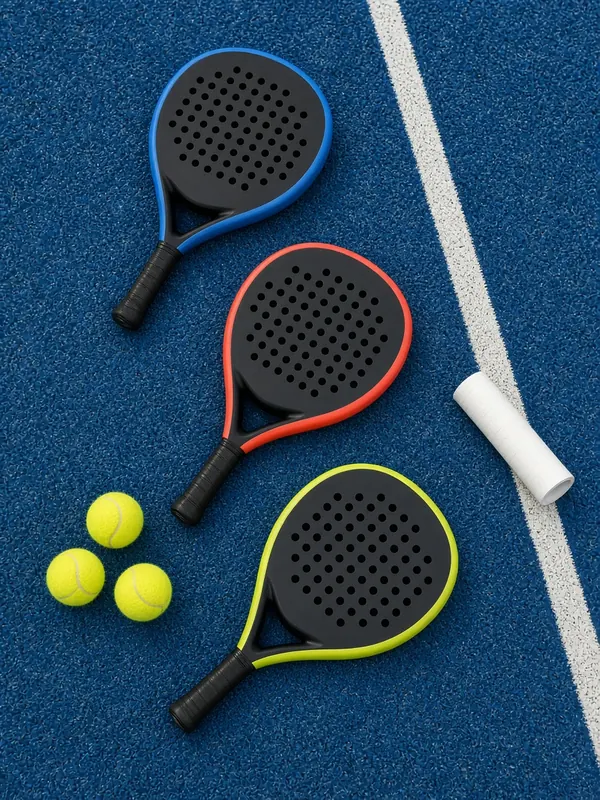
There are hundreds of padel rackets, and the marketing doesn't help. This guide rounds up what the LTA and published UK buying guides advise. Off The Glass has not tested any rackets. If you want specific models, see our roundup of the best padel rackets for beginners in 2026.
1. Shape: start round
- Round: the sweet spot sits low and central, so it's the most forgiving. The LTA and Padel Mad both recommend round rackets for beginners.
- Teardrop: a hybrid with a slightly higher sweet spot and a little more power overhead. Padel Mad sees it as a good second racket.
- Diamond: the sweet spot is near the top, built for power on smashes. Off-centre hits are punished, and it's not suited to beginners.
Source: LTA Padel: How to get started playing padel; Padel Mad: How to choose your first padel racket.
2. Weight: the guides disagree
Padel Mad says rackets typically weigh 340g to 395g and suggests 360g to 380g for beginners. The Guardian's beginner picks sit lighter, at 350g to 355g. Source: Padel Mad: How to choose your first padel racket; The Guardian: The best padel rackets in the UK. Lighter is easier on the arm, heavier feels more stable, so try a couple of venue rackets before you buy.
3. Balance: low or medium
A head-light (low balance) racket is easier to swing and more controlled. Head-heavy rackets give more power on smashes but need strength and timing. Padel Mad suggests low or medium balance for beginners. Source: Padel Mad: How to choose your first padel racket.
4. Materials: fibreglass and soft cores
Fibreglass faces flex more, which gives easy power, a softer feel and better vibration absorption. Carbon fibre is stiffer and more precise but less forgiving. Softer foam cores are gentler on the arm than firmer EVA rubber, which Padel Mad suggests anyone with a history of tennis elbow bears in mind. Source: Padel Mad: How to choose your first padel racket.
5. Budget
The Guardian's reviewer suggests £50 to £100 for a first racket. Padel Mad describes £50 to £100 as solid entry level, £100 to £200 as a step up for players with six months or more behind them, and £200-plus as advanced territory. Source: The Guardian: The best padel rackets in the UK; Padel Mad: How to choose your first padel racket. Prices are typical and change often.
Junior rackets
Junior rackets are lighter with a shorter grip, to make them easier for children to use. Source: LTA Padel: How to get started playing padel.
Still not sure? Most venues lend rackets, so try round and teardrop shapes before you spend anything. And don't forget your feet: our padel shoes guide explains what to look for.
Frequently asked questions
What padel racket should a beginner buy?
A round racket with a forgiving fibreglass face and a soft core, according to the LTA and Padel Mad. Source: LTA Padel: How to get started playing padel; Padel Mad: How to choose your first padel racket.
How heavy should a padel racket be?
Guides differ. Padel Mad suggests 360g to 380g for beginners, while The Guardian's beginner picks weigh 350g to 355g. Source: Padel Mad: How to choose your first padel racket; The Guardian: The best padel rackets in the UK.
Is carbon or fibreglass better for a padel racket?
Fibreglass is softer and more forgiving, so it suits beginners. Carbon fibre is stiffer and more precise but rewards good technique. Source: Padel Mad: How to choose your first padel racket.
How much should I spend on my first padel racket?
Typically £50 to £100, according to The Guardian and Padel Mad. Source: The Guardian: The best padel rackets in the UK; Padel Mad: How to choose your first padel racket.