
Sheffield tennis club drops padel court bid after 28 neighbours complain
Ecclesall Lawn Tennis Club withdrew its retrospective application before councillors could refuse it.
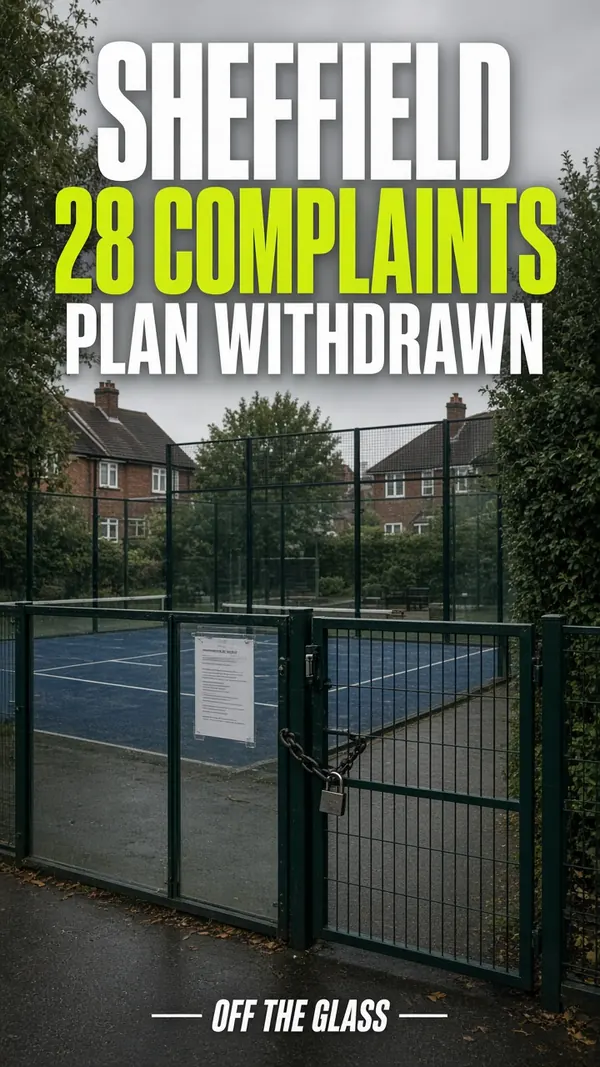
It is not all ribbon-cutting in British padel. In Sheffield, Ecclesall Lawn Tennis Club has given up, for now, on getting planning permission for the padel court it built without it. This is our round-up of the story, first reported by the Sheffield Star on 15 October.
How it got here
The club, off Carterknowle Road, put up a single padel court more than two years ago without planning consent. Council papers show an enforcement enquiry was first raised in March 2024. The club then applied for retrospective permission for the court and an acoustic fence around it.
The council's environmental team had already served an abatement notice in June that stopped the court being used. When the application went out to consultation, 28 residents on Dunkeld Road and Carterknowle Road complained about noise.
Withdrawn before the vote
Council officers recommended that the planning and highways committee refuse the application at its meeting on 13 October. Councillors were told the club had withdrawn it beforehand.
The officers' report explains why padel is a particular problem near homes. As well as the sound of ball on racket, the ball hitting the glass and mesh walls adds extra noise that tennis doesn't make. The report described that noise as having "impulsive, repetitive and intrusive characteristics" and said the proposed mitigation would not do enough to protect neighbours, especially on Dunkeld Road.
The bigger picture
The timing is awkward. On the same day we published this round-up, the LTA announced that 1.5 million people in Britain now play padel. Demand for courts is huge, and tennis clubs are an obvious place to put them, but a court tucked behind back gardens is a very different neighbour to a tennis court.
The Star's report does not say whether the club plans to try again with a different scheme. For other clubs, the lesson is clear: get permission and an acoustic assessment first, then build.