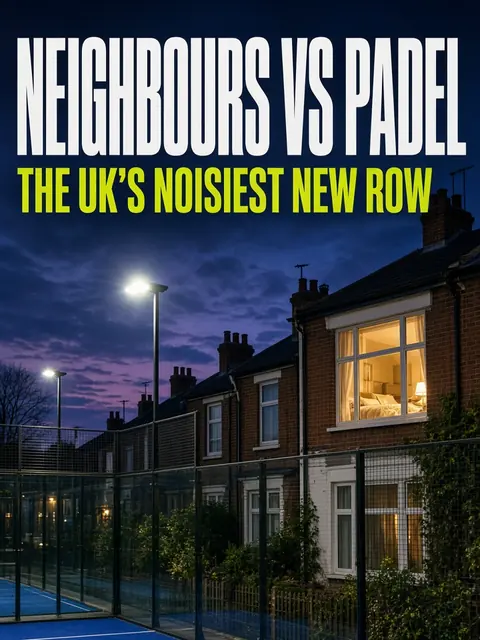
UK passes 3,000 padel courts, but London is lagging behind
New figures from data platform Padel Genie count 3,053 courts at 890 clubs, with hundreds more already approved.

Britain's padel building boom has passed another milestone. According to data platform Padel Genie, reported by The Padel Paper, the UK had 3,053 padel courts across 890 clubs as of 24 October 2026.
The nation-by-nation split
- England: 2,707 courts at 794 clubs
- Northern Ireland: 124 courts at 26 clubs
- Scotland: 112 courts at 40 clubs
- Wales: 110 courts at 30 clubs
Plenty more on the way
The pipeline is just as striking. Councils approved 572 new padel schemes in the past 12 months, which Padel Genie says adds up to at least 1,276 more courts. Another 450 schemes, covering at least 1,087 courts, are still waiting for a planning decision, and 46 clubs have announced 224 courts as coming soon.
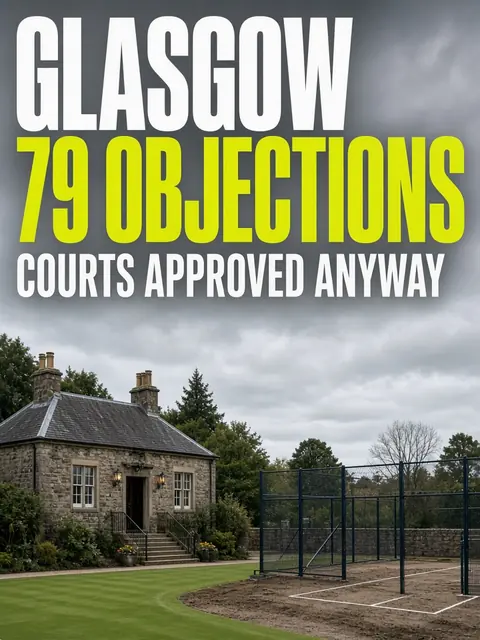
Despite the noise rows that make headlines, councils have approved 85% of the new schemes they have ruled on: 572 approvals against 98 refusals. Padel Genie also notes that its planning numbers are a floor. Where an application just says "courts" without a number, it counts two.
A lopsided map
Looking for a court? See where to play padel in the UK.
Across the UK there are about 4.5 courts for every 100,000 people, but that average hides big gaps. Northern Ireland and the North West are best served, on 6.5 courts per 100,000 each. London, at 3.8, is the lowest of any English region, and Scotland sits at 2.1. At council level, Hertsmere in Hertfordshire leads with 26 courts per 100,000 residents.
Padel Genie founder James Morgenstern expects at least 4,000 courts to be open by this time next year, and argues that site choice, not planning, is now the real challenge for operators. "Saturation is local, not national," he said, pointing out that 38 councils with more than 100,000 residents still have no open court at all.
Why this differs from the LTA figure
Earlier this month the LTA counted 2,445 courts at 682 venues for World Padel Day. The two counts come from different organisations using different sources and methods, so they shouldn't be compared directly. Both point the same way, though: up.